Blog Post
Project Management KPIs: The metrics that drive team success!
May 14, 2025
Table Of Content
Are you measuring the right things—or Just completing tasks?
You wrapped up a project. Tasks are ticked off, deliverables are sent, and the deadline was close enough. But was it truly a success?
Most project managers face this question often. Without measurable data, success becomes a feeling rather than a fact. Project management KPIs give you the clarity to answer that question with confidence. Spire Soft, a project management platform built for high-performing teams, helps you track every metric that matters without extra complexity.
In this article, you will learn which KPIs matter most, how to choose the right ones for your projects, and how to turn raw data into smarter decisions.
Quick Answer
Project management KPIs are measurable indicators used to evaluate project efficiency, progress, and outcomes. The most tracked ones include on-time delivery, budget variance, resource utilization, and task completion rate. A good KPI is specific, tied to a project goal, and reviewed regularly by the project manager or stakeholder team.
What Are Project Management KPIs?
Project management KPIs, or Key Performance Indicators, are quantifiable metrics linked directly to your project goals. They go beyond surface-level task counts and reveal whether your project is on track, over budget, or heading toward risk.
Unlike general statistics, KPIs are purpose-built. They help project managers monitor timelines, manage resources, catch risks early, and improve future planning. In short, they tell you not just whether your project is moving, but whether it is moving in the right direction.
According to PMI's Pulse of the Profession 2024, organizations that use defined success metrics on projects waste 28 times less money than those that do not. That is the real cost of skipping KPI tracking.
What Are the 10 Most Important Project Management KPIs?
1. On-Time Delivery Rate
This KPI measures whether your project or key milestones are completed by their planned deadline. It is one of the most direct signals of planning accuracy.
A consistently low on-time rate points to poor estimation, unclear scope, or blocked dependencies. Track this KPI per sprint, per phase, and at project close.
2. Budget Variance
Budget variance is the difference between what you planned to spend and what you actually spent. A high positive variance means overspending, while a negative one may signal underutilization.
According to KPMG's Global Project Management Survey 2023, nearly 70% of projects experience cost overruns at some stage. Monitoring budget variance weekly keeps your team ahead of those risks.
3. Resource Utilization
Resource utilization tracks how much of your team's available capacity is being used productively. The ideal range for most project teams sits between 70% and 80%.
Above that range, burnout risk rises. Below it, productivity is being lost. This KPI is especially useful for managers balancing multiple projects or remote teams across time zones.
How Do You Know If Your Team Is Overloaded?
If your resource utilization rate consistently exceeds 85%, your team is likely overloaded. Signs include missed deadlines, declining task quality, and rising sick leave. Tracking utilization gives you a proactive signal before burnout becomes a problem.
Adjust workloads by redistributing tasks or bringing in additional capacity before performance drops.
4. Task Completion Rate
This metric shows the percentage of tasks completed out of those assigned within a given period. A high task completion rate signals good momentum and clear ownership.
A low rate often points to unclear instructions, blocked tasks, or overly large work items that need to be broken down further.
5. Scope Change Frequency
Every change to the original project scope has a cost, whether in time, money, or focus. Tracking the number and nature of scope changes helps you understand whether your initial planning was realistic.
Frequent scope changes are one of the top reasons projects go over budget and over deadline. According to Wellingtone's State of Project Management 2023, scope creep affects over 52% of projects globally.
What Is Scope Creep in Project Management?
Scope creep happens when a project's requirements expand beyond the original agreement without proper approval or planning adjustments. It affects timelines, costs, and team morale.
To control it, establish a formal change request process from day one. Log every change, assess its impact, and get stakeholder sign-off before implementation.
6. Customer Satisfaction Score (CSAT)
Your project may finish on time and on budget, yet still miss the mark for the client. CSAT captures stakeholder or client satisfaction at project close, usually through a short survey.
This KPI is essential for service-based teams and agencies. A score below expectations signals a gap between delivery and expectation that KPIs alone will not catch.
7. Team Productivity Per Sprint
Productivity per sprint measures how much output your team generates in a set cycle. In agile teams, this often aligns with story points or task volume completed per sprint.
This KPI helps you build realistic forecasts over time. After three to five sprints, you will have a reliable velocity that makes future planning more accurate.
8. Return on Investment (ROI)
ROI compares the value created by a project to its total cost. It is the most convincing metric when justifying a project to leadership or a board.
A positive ROI confirms that the project delivered more value than it consumed. Calculating it at close also sets a baseline for evaluating similar future investments.
How Do You Calculate Project ROI?
Project ROI is calculated by subtracting the total project cost from the total value generated, then dividing that by the project cost. The result is expressed as a percentage.
For example, if a project cost $50,000 and generated $80,000 in value, the ROI is 60%. The higher the number, the stronger the business case for that investment.
9. Risk Mitigation Efficiency
This KPI tracks what percentage of identified risks were successfully managed before they became problems. A high score means your risk planning is working. A low score is a signal to revisit your risk register and response strategies.
Teams that track this metric proactively experience fewer project disruptions and recover faster when issues arise.
10. Project Health Score
A project health score is a composite indicator that combines cost, time, scope, and quality data into a single summary view. It is ideal for executive reporting and stakeholder dashboards.
Rather than digging through multiple reports, a health score gives decision-makers a quick, reliable read on where a project stands at any given moment.
How Do You Choose the Right KPIs for Your Project?
Not every KPI fits every project. Choosing the right set depends on your goals, your team size, and the nature of the work.
Start by asking what success looks like for this specific project. Is it speed to market? Budget efficiency? Client satisfaction? Let that answer guide your KPI selection.
Then apply the SMART framework to each chosen metric:
- Specific: Is it clearly defined?
- Measurable: Can you quantify it?
- Achievable: Is it realistic?
- Relevant: Does it connect to your project goals?
- Time-bound: Is there a review cadence?
For smaller teams, three to five KPIs are enough. Tracking too many creates noise and dilutes focus. For larger programs, a dashboard with layered KPIs across teams may be appropriate.
Pro Tip:
Review your KPIs at the end of every project phase, not just at close. Early signals allow you to correct course before a minor issue becomes a costly one.
How Does Spire Soft Help You Track Project KPIs Effortlessly?
Spire Soft is a project management platform designed to give project managers and their teams complete visibility without the manual overhead.
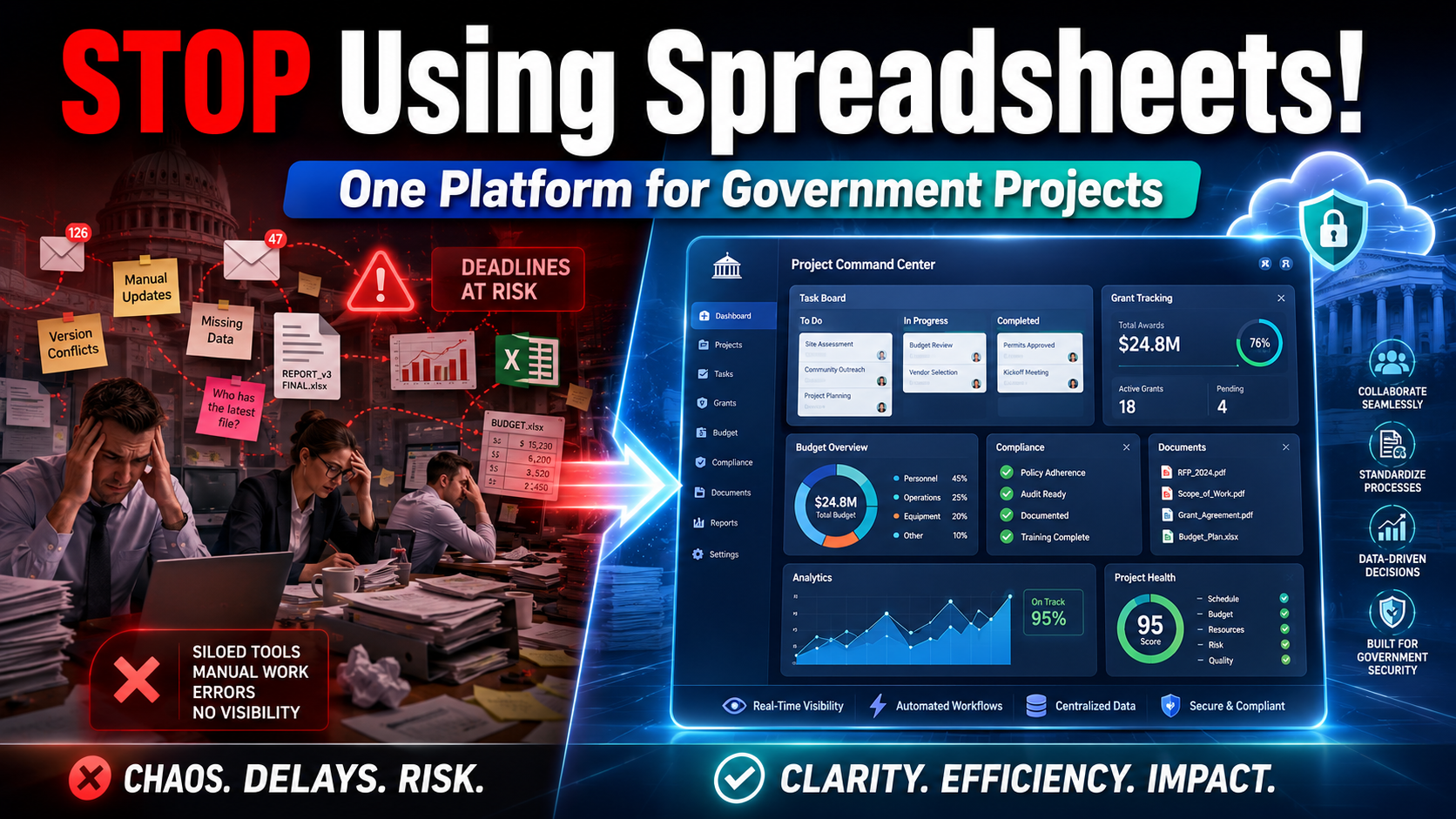
Instead of building KPI trackers in spreadsheets or toggling between disconnected tools, Spire Soft integrates performance tracking directly into your daily workflow.
What Can You Do With Spire Soft?
You can visualize task progress through Kanban and list views that update in real time. You can track team time and workloads to keep resource utilization within a healthy range. Custom workflows allow you to align task structures with your specific KPIs from day one.
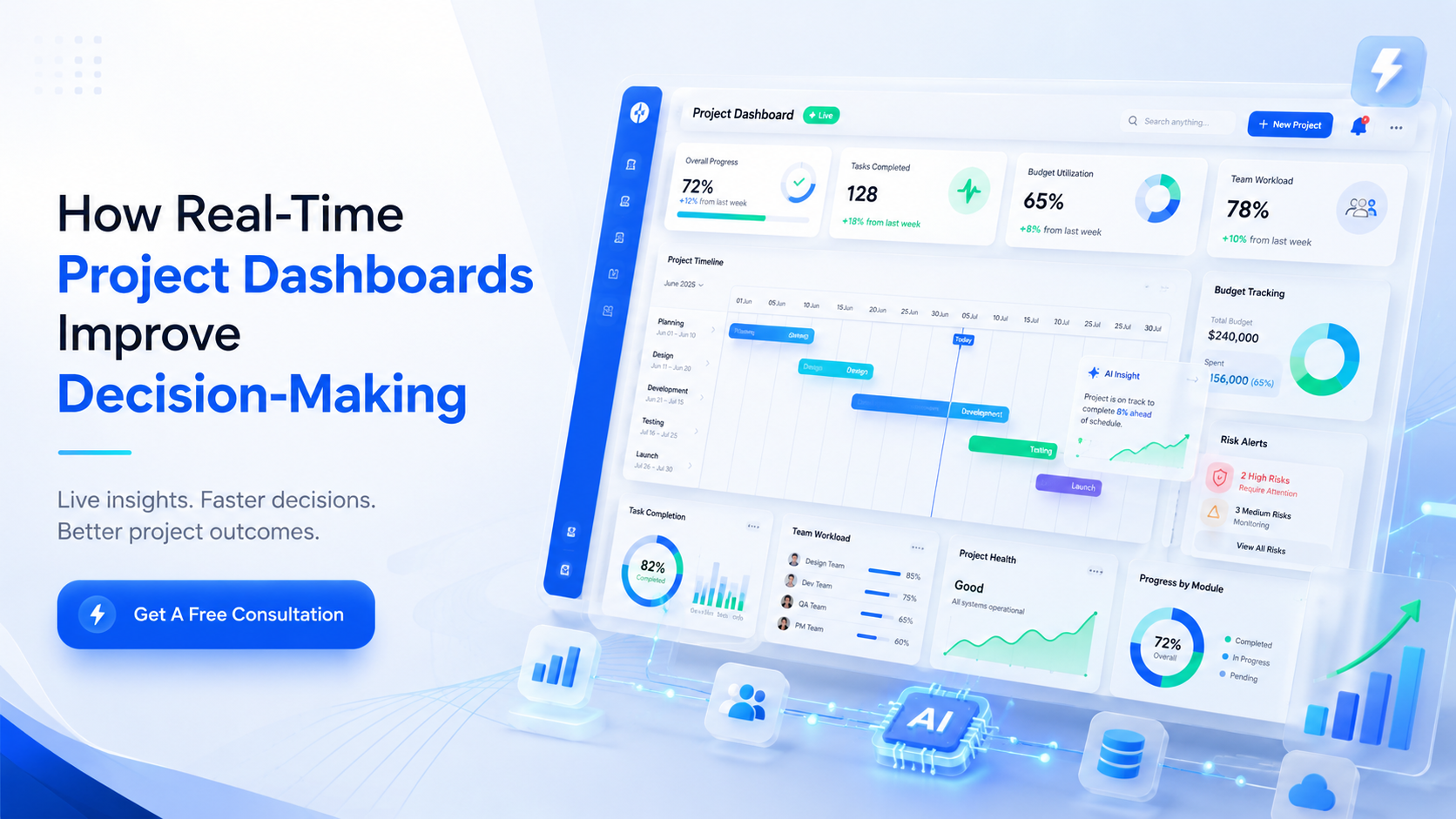
Live dashboards show delivery timelines and task status without the need for manual status meetings. When reporting time comes, you can export structured reports for stakeholders, audits, or retrospectives in just a few clicks.
You do not need to build your KPI tracking system from scratch. Spire Soft's tools are already designed to make performance management intuitive, built into the way your team works every day.
Turn Project Data Into Project Wins
Measuring the right things changes the way your team works. When you track what matters, decisions get faster, blockers get spotted earlier, and results become repeatable.
Project success is not a feeling. It is a set of numbers that tell an honest story about how your team performed and what to do differently next time.
If your current tools do not give you that level of visibility, that gap has a cost. The right KPI setup, paired with a platform built to support it, gives you something far more valuable than a completed task list. It gives you a pattern for consistent improvement.
Start tracking what matters with Spire Soft. Begin your free trial today, no credit card required.
Frequently Asked Questions
What are project management KPIs?
Project management KPIs are measurable indicators used to evaluate how efficiently and successfully a project is progressing toward its goals. Common examples include on-time delivery rate, budget variance, and task completion rate. They give project managers and stakeholders a clear, data-driven view of project performance throughout its lifecycle.
How many KPIs should a project manager track?
Most project managers track between three and seven KPIs at one time. Tracking too many metrics creates reporting overhead and reduces focus. Choose KPIs that are directly tied to your project goals and review them at each phase, not just at project close, for the most useful insights.
What is the difference between a KPI and a metric in project management?
A metric is any measurable data point, such as the number of tasks completed. A KPI is a metric tied to a specific strategic goal, making it a performance indicator rather than just a data point. All KPIs are metrics, but not all metrics qualify as KPIs without a defined purpose and target.
Why do projects fail without KPI tracking?
Projects without KPI tracking rely on subjective assessments of progress. Teams miss early warning signs, stakeholders receive inconsistent updates, and post-project learning is limited. According to PMI, projects with defined success metrics are significantly more likely to finish on time and within budget than those without them.
What is a good on-time delivery rate for project teams?
A healthy on-time delivery rate is generally considered to be 85% or higher for most project teams. Rates below 70% signal consistent planning or execution issues that need to be addressed at the process level, not just on an individual project basis.
How do you present KPIs to stakeholders?
Use a simple dashboard or summary report that highlights three to five top-level KPIs with a clear status indicator, such as on track, at risk, or off track. Provide a one-sentence explanation for any metric that deviates from target. Keep the format consistent across reporting periods so stakeholders can spot trends over time.
What is budget variance in project management?
Budget variance is the difference between the planned project budget and the actual amount spent at any point during the project. A positive variance means you have spent more than planned. A negative variance means you are under budget. Tracking this weekly helps project managers catch overspending before it becomes unmanageable.
How does resource utilization affect project outcomes?
When resource utilization is too high, team members burn out and quality drops. When it is too low, capacity is being wasted. Maintaining utilization between 70% and 80% helps teams stay productive without risking fatigue. Monitoring it regularly also helps managers redistribute work before a bottleneck disrupts delivery.
What is a project health score?
A project health score is a composite indicator that combines time, cost, scope, and quality data into a single summary metric. It is designed to give stakeholders and project sponsors a fast, reliable read on overall project status without requiring them to review multiple individual reports or dashboards.
How does Spire Soft help with KPI tracking?
Spire Soft integrates KPI tracking directly into your team's daily workflow through real-time dashboards, custom workflows, time and workload tracking, and exportable reports. It removes the need for separate spreadsheets or manual data collection, giving project managers continuous visibility into performance without added administrative burden.