Blog Post
Project Management for Remote Teams: A Smarter Approach to Project Management
July 8, 2025
Table Of Content

Imagine this: You manage a remote team spread across three states. Everyone is working, but somehow deadlines are missed, priorities shift unexpectedly, and updates are scattered across emails, chat messages, and spreadsheets. You ask for a project update, and the responses vary — no one really knows who is accountable for what.
Sound familiar?
This is the reality for many remote teams today. As businesses adopt hybrid and fully remote work models, they often struggle with fragmented communication, limited visibility, and inefficient workflows — which ultimately lead to wasted time, reduced productivity, and higher operational costs.
Remote teams especially struggle with task tracking, accountability, and clear communication when work is spread across multiple tools like emails, chat apps, and spreadsheets. Without a centralized system, this lack of coordination can result in missed deadlines, duplicated work, and overall inefficiency. Project management tools — particularly ticketing systems — help solve these issues by organizing work into structured, trackable tasks and improving visibility across the entire team.
This article explains why traditional project management tools often fail for remote teams and how a centralized ticketing system can improve organization, visibility, and accountability. It shows how Spire Soft, a Fresno, California-based enterprise software company, simplifies task management through a clear step-by-step workflow, helping teams reduce confusion, improve efficiency, and lower operational costs while working remotely.

Key Takeaways
- Traditional project management tools often fail remote teams because they are too complex, costly, or not designed for distributed work environments, leading to poor coordination and inefficiency.
- Remote teams frequently face challenges such as missed deadlines, unclear accountability, and fragmented communication when work is spread across emails, chat apps, and spreadsheets.
- A centralized project management system helps solve these issues by improving visibility, organization, and collaboration across teams working in different locations.
- Ticketing systems improve structure by breaking work into trackable tasks with clear ownership, status updates, and real-time collaboration within each ticket.
- Using a Kanban-based workflow allows teams to visually manage progress and move tasks through stages like To Do, In Progress, and Completed.
- Spire Soft reduces operational costs by replacing multiple tools, minimizing miscommunication, speeding up onboarding, and eliminating unnecessary rework and meetings.
- Spire Soft is built and supported from Fresno, California, serving SMEs, nonprofits, government offices, and enterprises across the United States.
Why Don't Traditional Project Management Tools Work for Remote Teams?
Most project management tools are either too expensive, overly complex, or not tailored for the needs of small-to-mid-sized remote teams. Platforms built for massive enterprises often come loaded with features that smaller or distributed teams will never use — yet they still pay for them.
On the other end of the spectrum, lightweight tools like shared spreadsheets or basic to-do lists lack the structure and accountability remote teams need. The result? A constant juggling act between tools that don't talk to each other.
As a result, teams commonly:
- Struggle to keep tasks organized across time zones and departments
- Waste time switching between email, chat, spreadsheets, and separate task managers
- Miss deadlines due to lack of real-time visibility and unclear accountability
- Spend more on software subscriptions than necessary — often paying for features locked behind premium tiers
- Onboard new hires slowly because there is no single, unified system to learn
- Lose institutional knowledge when conversations and decisions are buried in chat threads or inboxes
For teams in Fresno, California and across the United States, this challenge is amplified when managing staff across multiple time zones or office locations. What remote teams truly need is not more tools — but fewer, better-integrated ones.
The Solution: Centralized Project Management for Remote Teams
This is where Spire Soft steps in. Headquartered in Fresno, California, Spire Soft's project management platform is purpose-built to solve this exact problem — especially for distributed teams in SMEs, Non-Profits, Government Offices, and fast-growing Enterprises.
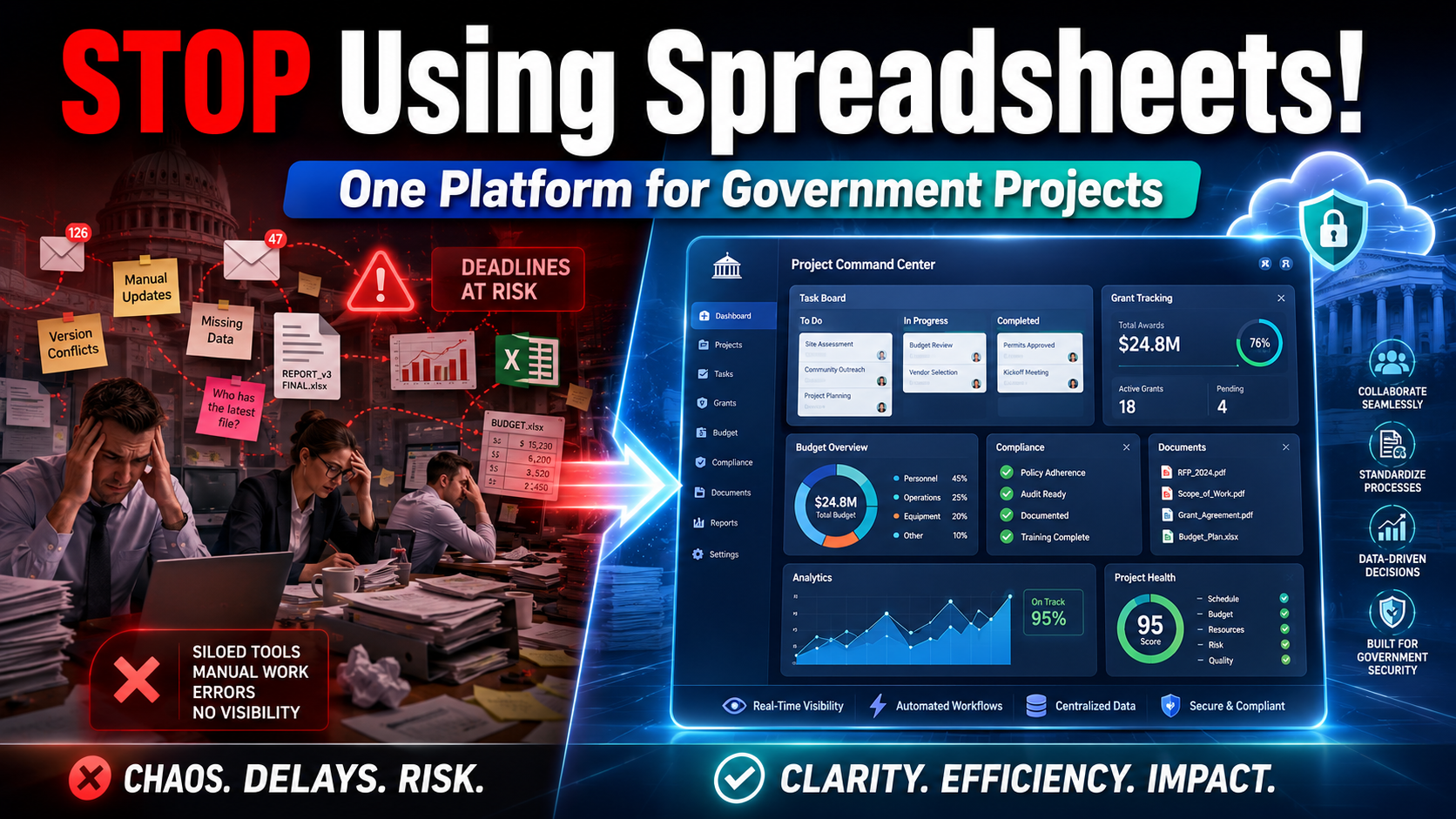
With a Kanban-based system at its core, Spire Soft transforms chaos into clarity. It gives your team one platform to plan, assign, track, and collaborate on projects — no matter where they are located.
Rather than patching together a dozen different apps, Spire Soft brings everything under one roof: task assignment, due date management, priority tracking, issue resolution, file sharing, time tracking, and real-time reporting. Teams get a single source of truth for all their work.
But what truly sets Spire Soft apart is its ticket-based project management system — a structured, intuitive way to manage work that scales from a five-person nonprofit to a 500-person enterprise operation.
What is a Ticketing System in Project Management?
A ticketing system lets you break work down into manageable tasks — known as "tickets" — that can be assigned, prioritized, tracked, and resolved systematically. Each ticket represents a single unit of work: a task, bug fix, content request, campaign, or client deliverable.
Unlike general task management tools, a ticketing system provides structure:
- Every ticket includes a status (e.g., Open, In Progress, Resolved)
- Tickets are tagged, prioritized, and time-stamped
- You can comment, upload files, and track changes in real time
- Teams have clear ownership and accountability for every item
- Managers can monitor workloads and catch bottlenecks before they become crises
Think of a ticketing system as the backbone of your team's operations. Instead of tasks floating loosely in someone's inbox or a shared notes doc, every unit of work has a home — with a history, an owner, and a clear path to completion.
For remote and hybrid teams especially, this level of structure is not just helpful — it is essential.
How Remote Teams Use Spire Soft's Ticketing System
Here is how it works in five simple steps:

Step 1: Create a Ticket
A team member creates a ticket describing the task, including a due date, priority level, and relevant files or context. Tickets can represent anything from a client deliverable to an internal bug fix to a marketing campaign milestone.
Example: "Design homepage banner for Q2 campaign"
Step 2: Assign the Ticket
The ticket is assigned to a specific team member or group, so ownership is crystal clear. No more confusion about who is doing what or who dropped the ball. Managers can assign tickets from anywhere, and team members receive instant notifications.

Step 3: Track Progress Visually with Kanban
The ticket appears on your team's Kanban board, which reflects its current status — "To Do," "In Progress," "Under Review," or "Completed." Simply drag and drop to move tickets between stages as work progresses. At a glance, anyone on the team can see exactly where every project stands

Step 4: Collaborate Inside the Ticket
Team members can leave comments, tag each other, ask questions, and upload files — all within the ticket itself. This keeps communication centralized and eliminates the scattered emails, forgotten Slack threads, and out-of-context chat messages that plague most remote teams.
Step 5: Close and Archive
Once completed, the ticket is marked as "Resolved" or "Closed." You now have a permanent log of all work done — invaluable for audits, performance reviews, client billing, or team retrospectives. Nothing is lost. Everything is searchable.
How Does This Reduce Costs for Remote Teams?

Remote work can be expensive when teams rely on a fragmented stack of disconnected tools. Spire Soft directly reduces operational costs in several ways:
- Fewer tools, lower costs — Replace multiple apps (chat integrations, file sharing, task lists, time trackers) with one unified platform
- No feature restrictions — Spire Soft includes full functionality across plans with no paywalls for essentials like commenting, file attachments, or deadline management
- Faster onboarding — New team members can start using the system within minutes, dramatically reducing time spent on training and orientation
- Eliminates miscommunication — Centralized tickets reduce expensive rework, unproductive meetings, and misaligned priorities
- Reduces meeting overhead — When everyone can see task status in real time, fewer status meetings are needed
- Scales without re-tooling — As your team grows, Spire Soft grows with you. No need to migrate to a new platform or retrain staff
In short, the ticketing system in Fresno streamlines operations and scales easily with your team — no matter your size or budget. For organizations in Fresno, California and nationwide, this translates to real, measurable savings over time.
Spire Soft's Full Feature Set: More Than Just Tickets
While the ticketing system is central to Spire Soft's project management platform, it is far from the only capability. The platform is designed to be a complete operational hub for distributed teams. Key features include:
Automated Workflows
Set up automation rules to move tickets, send notifications, or trigger actions based on status changes — saving your team hours of manual work every week.
Reporting & Analytics
Generate real-time reports on project progress, team workloads, and deadline adherence. Export data for client reporting or internal review. Managers gain full visibility without micromanaging.
User Management & Permissions
Control who sees what. Assign role-based access to team members, contractors, or clients. Keep sensitive projects private while maintaining transparency where it matters.
Weekly Time Tracking
Track time spent on individual tickets and projects with detailed descriptions. Easy to log, review, and export — ideal for billing clients or evaluating team productivity.
Issue Tracking & Resolution
Capture issues as they arise, assign them to the right person, and track resolution in real time. Nothing slips through the cracks.
Document Management
Attach files, reference documents, and manage resources directly within projects and tickets. No more hunting through email attachments or cloud storage folders.
Team Collaboration Tools
Built-in commenting, @mentions, notifications, and file sharing ensure your team communicates where the work happens — not in a separate app.
Designed for Real Teams in the Real World
Spire Soft is not built for Silicon Valley startups with unlimited budgets. It is built for organizations that need real results without the enterprise price tag. Based in Fresno, California, Spire Soft understands the needs of lean, practical teams that have to do more with less.
Spire Soft is ideal for:
- Marketing agencies running lean remote or hybrid teams across multiple client accounts
- Nonprofits that need organizational structure without subscription bloat or costly feature tiers
- Local and state government teams managing internal operations, case workflows, and interdepartmental coordination
- SMEs that need results-focused project management without overcomplicating their workflows
- Fast-growing enterprises that need a scalable system that will not require a platform switch in 18 months
Spire Soft is also proud to be a trusted vendor for Fresno County, California — providing software solutions that support the Fresno County Probation Department with streamlined operations and improved tracking. This real-world deployment reflects Spire Soft's commitment to building software that works in demanding, accountability-driven environments.
With flexible pricing and a no-nonsense interface, Spire Soft is the project management system that works — without the noise.
Why Spire Soft is the Smarter Choice for Remote Work
Spire Soft has been purpose-built to meet the demands of modern, distributed teams. Here is how it stands apart from the competition:
- No feature-gating by plan — Every team, regardless of size, can access core project management functionalities without hitting paywalls
- Designed for real teams, not just large enterprises — The platform works seamlessly for SMEs, Nonprofits, and Government Offices alike
- Scalability — Start with a small team and expand easily without changing tools or retraining staff
- Local expertise, national reach — Built and supported from Fresno, California, with an understanding of how real organizations operate
- Proven in government settings — Trusted by Fresno County, CA, demonstrating reliability in high-accountability environments
- Dedicated support from day one — No chatbot mazes; real support via chat, email, or phone
- Regular updates — New features and improvements are released continuously based on real user feedback
Choosing Spire Soft means aligning your team with a flexible, transparent, and effective project management system that was built with your success in mind.
Your Next Step Toward Smarter Remote Project Management
Spire Soft is more than just another project management tool — it is a modern solution designed to simplify workflows, enhance communication, and keep remote teams aligned from anywhere in the world.
Whether you are running a startup, scaling a remote agency, managing a nonprofit, or leading a distributed operations team, Spire Soft gives you the structure and flexibility you need to succeed — backed by a team that understands real-world organizational challenges.
Spire Soft is proudly based in Fresno, California, and trusted by teams across the United States, including the Fresno County Probation Department.
Ready to get started?
If your team is still dealing with missed deadlines, scattered updates, and confusion over responsibilities, that’s the problem. Contact Spire Soft : We will help you bring everything into one structured system where tasks are clear, ownership is defined, and your team finally has full visibility over every project from start to finish.
Frequently Asked Questions
Below are answers to the most common questions teams have about Spire Soft and remote project management.
What is Spire Soft and where is it based?
Spire Soft is an enterprise software development and SaaS company headquartered in Fresno, California. With over 15 years of experience, Spire Soft builds tailored, scalable software solutions for SMEs, nonprofits, government agencies, and enterprises across the United States. Its project management platform is one of several products designed to help teams work smarter and more efficiently.
Who is Spire Soft's project management tool designed for?
Spire Soft's project management platform is designed for any team that needs structure, visibility, and collaboration — regardless of size. It is particularly well-suited for remote and hybrid teams, marketing agencies, nonprofits, local government offices, and fast-growing small-to-medium enterprises (SMEs). The platform scales from small teams of five up to large distributed organizations.
Do I need technical expertise to use Spire Soft?
No. Spire Soft is designed with simplicity in mind. The interface is intuitive enough for non-technical users to get started within minutes. Detailed onboarding resources, setup guides, and help documentation are available from day one. For more complex needs, Spire Soft's support team provides personalized guidance via chat, email, or phone.
What is a ticketing system and why does my team need one?
A ticketing system breaks your team's work into individual, trackable tasks called "tickets." Each ticket has an owner, a due date, a priority level, a status, and a full communication thread. This structure eliminates the ambiguity that comes with managing work through email or chat. It creates accountability, improves visibility, and ensures nothing gets lost. For remote teams especially, a ticketing system is the most effective way to stay coordinated without constant check-in meetings.
How does Spire Soft's Kanban board work?
Spire Soft's Kanban board gives your team a visual, real-time view of all project work. Tickets are displayed as cards that move through customizable stages such as To Do, In Progress, Under Review, and Completed. Team members and managers can drag and drop tickets between stages as work progresses. At any moment, anyone with access can see exactly where every task stands — without needing to ask or schedule a meeting.
Can Spire Soft replace the multiple tools my team currently uses?
Yes — that is one of Spire Soft's primary advantages. Many remote teams currently rely on a fragmented stack: separate apps for task management, file sharing, time tracking, communication, and reporting. Spire Soft consolidates all of these into a single platform, reducing subscription costs, eliminating tool-switching friction, and creating one unified source of truth for your entire team's work.
Does Spire Soft offer time tracking?
Yes. Spire Soft includes built-in weekly time tracking with detailed descriptions. Team members can log time directly against specific tickets and projects. Managers can review and export time logs for billing, productivity analysis, or payroll purposes. This feature is particularly valuable for agencies billing clients by the hour and for any team that needs insight into where effort is being spent.
Is Spire Soft suitable for government or regulated industries?
Absolutely. Spire Soft is an authorized vendor for Fresno County, California, and provides software to support the Fresno County Probation Department. This real-world deployment demonstrates the platform's reliability, accountability features, and suitability for compliance-driven environments. Spire Soft also serves healthcare, law, and other regulated industries through its broader suite of enterprise software solutions.
What kind of customer support does Spire Soft provide?
Spire Soft provides dedicated support from day one — no automated chatbot mazes or support ticket black holes. Teams can reach the support team via chat, email, or phone. Onboarding resources, help documentation, and setup guides are also available to help new users get up and running quickly. The platform receives regular updates based on real user feedback, ensuring it continues to improve over time.
Does Spire Soft offer a free trial?
Yes. Spire Soft offers a free trial with no credit card required, so your team can explore the platform and experience its features firsthand before committing. Dedicated support is available during the trial period to help you evaluate whether the platform is the right fit for your organization's needs.
How does Spire Soft handle user permissions and data security?
Spire Soft includes role-based user management and permissions, giving administrators control over who can view, edit, or manage specific projects and tickets. This is especially important for organizations managing sensitive client data, internal HR workflows, or government cases. Access can be tailored to individual team members, departments, or external contractors, ensuring the right people see the right information.
How is Spire Soft different from other project management tools like Asana, Jira, or Monday.com?
While tools like Asana, Jira, and Monday.com are well-known, they are often built for large enterprises and come with complex pricing tiers that lock essential features behind premium plans. Spire Soft is built specifically for lean, practical teams — SMEs, nonprofits, and government agencies — that need full functionality without enterprise-level overhead. Spire Soft also offers a more personalized support experience, built-in time tracking, and the flexibility to integrate with other enterprise tools. Most importantly, it is backed by a U.S.-based team in Fresno, California, with over 15 years of hands-on software development experience.