Blog Post
How to Improve Team Accountability in Project Management
July 7, 2026
Table Of Content

Introduction
Picture this: It's Wednesday afternoon. Your project deadline is Friday. Three team members are waiting on a deliverable from a fourth, who hasn't responded to messages since Tuesday. Nobody's clear on who was supposed to confirm that budget approval. Work is slowing, and nobody owns the problem.
This breakdown happens in nearly every organization—not because people are careless, but because accountability is invisible. Team members don't know what others are doing. Managers can't see blockers until they've already delayed the timeline. Priorities shift without clear ownership.
Spire Soft project management software in Fresno, California was built to solve exactly this problem. It's an enterprise project management platform designed to make accountability transparent, automatic, and measurable. But accountability isn't just about the tool—it's about the systems, culture, and structure you build around task ownership, real-time visibility, and clear expectations.
Accountability is the single structural element that transforms project teams from reactive to proactive. It's not about blame; it's about clarity.
In this article, you'll discover actionable strategies to build accountability within your team, frameworks that work, and how modern project management software embeds accountability into your daily workflows.
Quick Answer
Team accountability means every member knows their responsibilities, understands how their work connects to team goals, and maintains transparent, real-time visibility of progress. Build it through clear task ownership, role-based permissions, and real-time progress tracking. Use frameworks like RACI matrices, automated notifications, and project management tools that make visibility automatic—not an afterthought.

What Is Team Accountability in Project Management?
Team accountability is more than assigning tasks and hoping people finish them. It's the structural assurance that every team member understands their responsibility, knows who depends on their work, and maintains transparent progress visibility with the team and leadership.
According to research from the Center for Creative Leadership, teams with clear accountability structures report 40% higher project completion rates and significantly fewer scope creep incidents. Accountability creates psychological safety because team members know exactly what's expected, when it's due, and whether they're on track.
The core elements of accountability are:
Clear Ownership – Each task has one person responsible.
Transparent Progress – Real-time visibility into who's doing what.
Explicit Deadlines – Milestones with measurable completion criteria.
Feedback Loops – Regular check-ins that surface blockers early.
Consequences & Recognition – Accountability only works when progress is tracked and acknowledged.
Without accountability, projects drift. With it, teams move with intention.
Why Does Accountability Matter in Project Delivery?
Teams with structured accountability deliver on time. It's not magic—it's mathematics.
According to the Project Management Institute (PMI) 2024 Pulse of the Profession report, organizations that implement formal accountability frameworks report 72% of projects meeting their original scope and timeline. Organizations without clear accountability struggle with scope creep and delays in 63% of projects.
Accountability prevents three common breakdown patterns:
Task Handoff Failures:
When nobody owns the transition between team members, work stalls. Clear accountability means one person is responsible for handing off to the next.
Invisible Blockers:
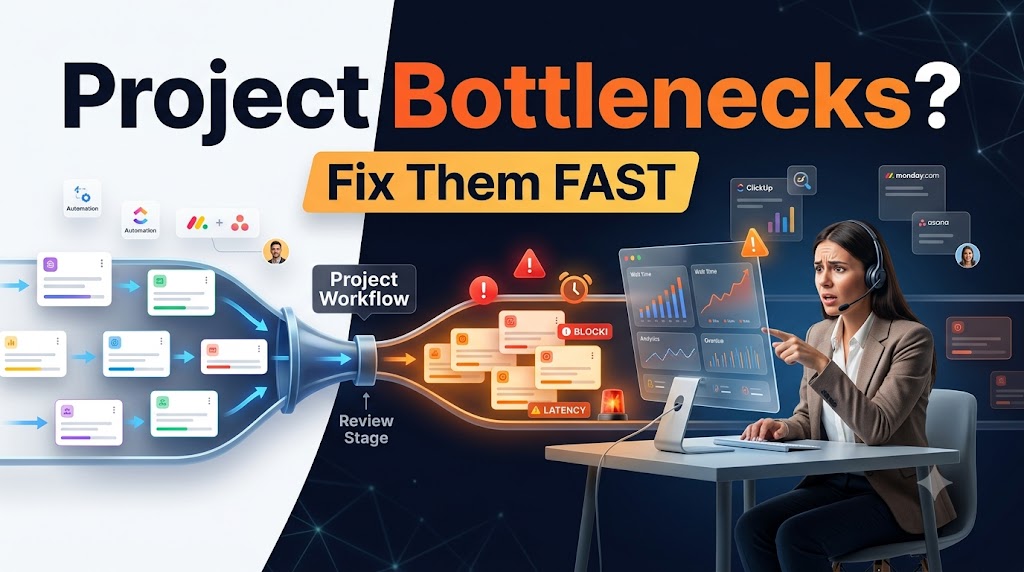
Without real-time visibility, you discover delays on Friday that could have been solved on Monday. Transparent tracking surfaces problems when you can still fix them.
Scope Creep:
New requests without clear ownership and priority logic silently pile onto existing workloads. Accountability frameworks help you say "yes, and here's the trade-off."
Motivation & Ownership – People perform better when they understand the impact of their work. Accountability ties individual tasks to team outcomes.
How to Build an Accountability Culture: Practical Strategies
Establish Clear Task Ownership Using the RACI Framework
The RACI matrix is one of the simplest, most powerful tools for eliminating ambiguity. Every task or deliverable gets four roles assigned:
Responsible – The person doing the work.
Accountable – The person answerable if it's not completed.
Consulted – People whose input is needed.
Informed – People who receive updates but don't actively participate.
For every project deliverable, map roles explicitly. Document it. Reference it in every project kick-off.
According to Gartner's 2023 Project Management Benchmark, teams using explicit RACI matrices report 31% fewer cross-functional conflicts and 28% faster decision-making.
Create Real-Time Visibility Into Progress
Accountability without visibility is just hope. When team members can't see each other's progress, they can't surface dependencies early or adjust priorities.
Real-time visibility means:
- Task status is updated daily (not weekly).
- Blockers are visible the moment they appear.
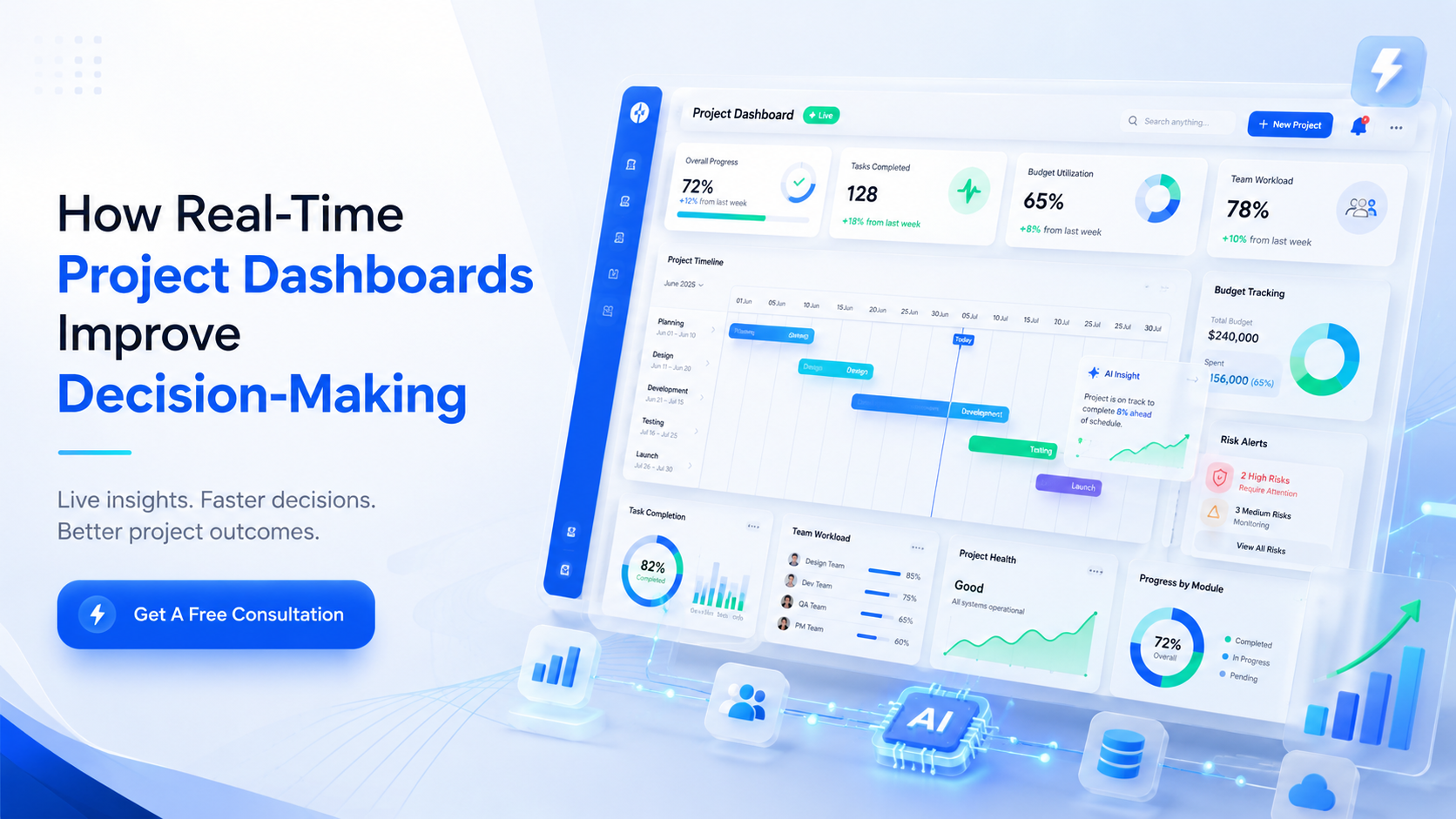
- Leadership sees project health in a single dashboard.
- Team members can see how their work fits into the larger timeline.
Spire Soft project management software in Fresno provides automated status tracking, timeline visualization, and instant notifications when tasks are delayed or blocked. Instead of status meetings where people guess at progress, your data is current and fact-based.
Set Explicit, Measurable Deadlines
Vague deadlines create ambiguity. "Soon" doesn't work. "By end of quarter" creates confusion.
Accountability requires:
Specific dates – Not timeframes, dates.
Measurable completion criteria – What "done" actually means.
Dependency visibility – Team members see which tasks block others.
Buffer time – Realistic estimates that account for review and revision.
When a deadline is clear and written, accountability becomes mechanical. Team members align to it because there's no interpretation needed.
Use Automated Notifications to Surface Delays Immediately
Delays discovered early are fixable. Delays discovered late derail timelines.
Automated notifications mean:
- When a task is 2 days from deadline with low progress, the assignee and manager get an alert.
- When a blocker is marked as "stuck," the responsible person is notified.
- When a milestone is at risk, leadership gets visibility in real time.
- When a task is completed, the next dependent task automatically becomes active.
These automations aren't nagging—they're friction-reduction. They move problems from "discovered in a meeting" to "solved in an hour."
Conduct Weekly Pulse Checks Instead of Status Meetings
Replace lengthy status meetings with brief, structured check-ins focused on blockers and wins.
A 15-minute pulse check includes:
- What did we complete this week?
- What are we completing this week?
- What's blocking progress?
- What do we need help with?
This format keeps accountability visible without theater. People know they'll report progress, so they track it throughout the week.
Common Accountability Failures and How to Prevent Them
Failure #1: Accountability Confused With Blame
When teams conflate accountability with punishment, people hide problems instead of surfacing them.
Solution:
Distinguish between accountability and consequences. Accountability is transparency. If someone identifies a blocker early, that's accountability working correctly. If someone hides a problem until it explodes, that's an accountability failure.
Culture matters. Frame accountability as "helping each other stay on track," not "catching mistakes."
Failure #2: Task Ownership That's Too Diffuse
When three people share responsibility for one task, nobody's actually responsible.
Solution:
One person per task. Always. Use the RACI framework to distribute accountability clearly. If a task genuinely requires multiple people, one person owns the coordination.
Failure #3: Visibility Without Follow-Up
If progress is visible but nobody acts on delays, visibility becomes noise.
Solution:
Pair transparency with a decision-making framework. When a task is at risk, the responsible person has 24 hours to communicate a solution (adjusted timeline, additional resources, changed scope). No exceptions.
How Project Management Software Embeds Accountability
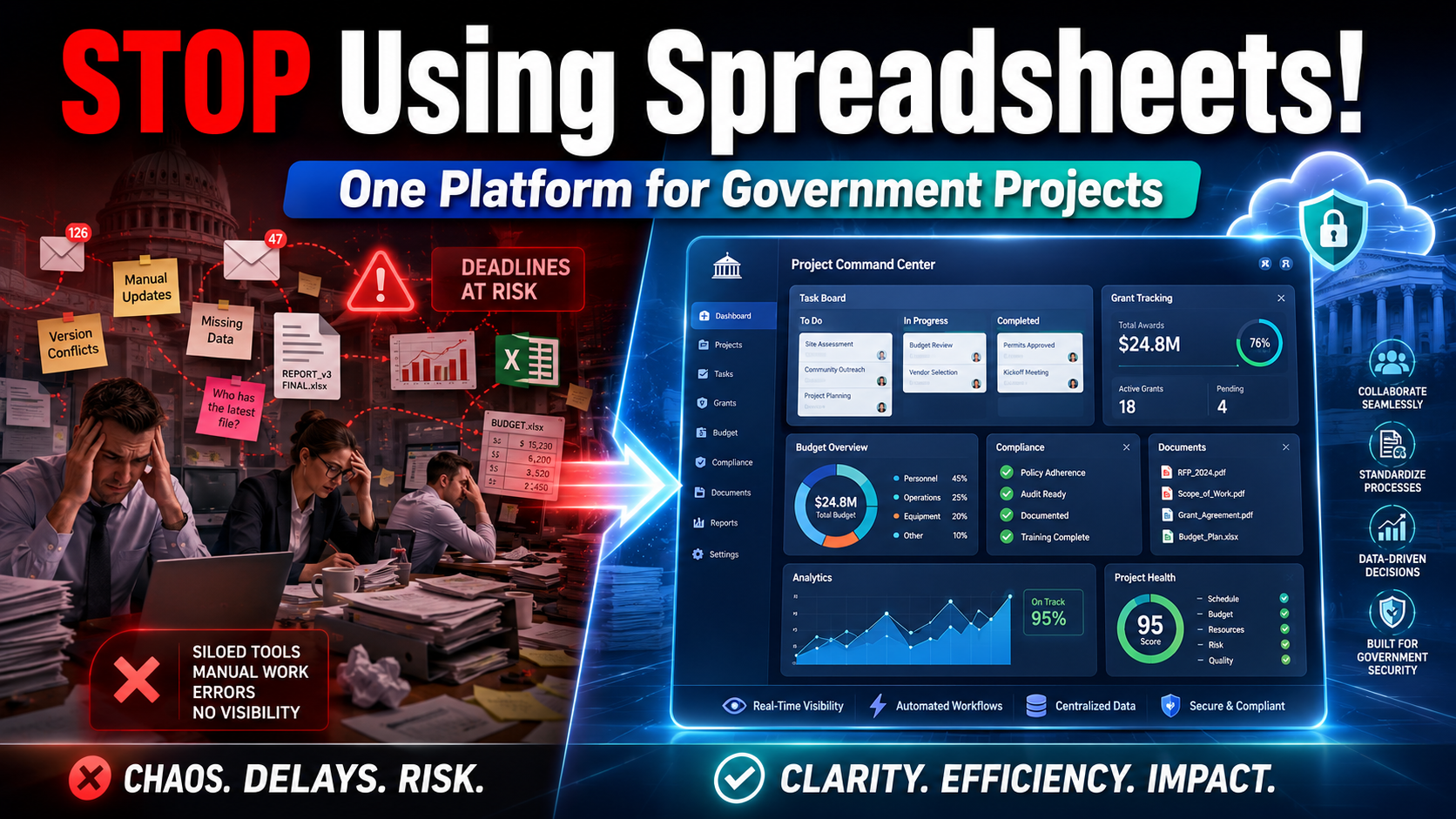
Manual accountability is exhausting. Spreadsheets get outdated. Email threads become incomprehensible.
Modern project management software like Spire Soft project management software embeds accountability into the platform itself:
| Accountability Element | Manual Approach | With PM Software |
| Task Ownership | Email threads, unclear handoff | Assigned roles, automated notifications |
| Progress Visibility | Weekly status meetings | Real-time dashboard, auto-updated status |
| Deadline Tracking | Calendar reminders, easy to ignore | Visual timeline, escalation alerts at risk |
| Blocker Communication | Slack messages, lost in noise | Flagged task status, priority notifications |
| Reporting | Manual spreadsheet summaries | Generated reports, historical trend data |
| Role Clarity | Documents that get outdated | Role-based permissions, locked responsibilities |
Spire Soft project management software in Fresno goes further by offering:
Automated Workflows:
Tasks trigger next actions automatically, eliminating handoff delays.
Real-Time Reporting & Analysis:
Leadership sees project health without asking.
User Management & Permissions:
Role-based access ensures people see what they need.
Ticket Creating & Assignment:
Clear ownership is built into task creation.
Enhanced Team Collaboration:
Comments, file sharing, and notifications keep discussion in context.
The software doesn't replace culture or frameworks—it makes them automatic.
Accountability Metrics That Matter
You can't improve what you don't measure. Track these metrics monthly:
On-Time Completion Rate:
What percentage of tasks finished by their deadline? Target: 90%+.
Task Blocker Time:
How long does an average blocker remain unresolved? Target: Under 24 hours.
Deadline Variance:
By how many days do deliverables typically slip? Target: Zero variance.
Team Visibility Score:
What percentage of team members update task status daily? Target: 95%+.
These aren't punitive metrics. They're diagnostic. They tell you where your accountability system needs adjustment.
Closing Thought
Accountability isn't a system you build once and forget. It's a practice you refine. Every successful team—whether in Fresno, the Central Valley, or anywhere else—has figured out a way to make responsibility visible, expectations clear, and progress transparent.
The organizations that execute fastest aren't the ones with the smartest people. They're the ones where everyone knows what they're supposed to do, can see how they're doing it, and can get help the moment they're stuck.
Your team has that capability. You just need to structure it.
Ready to embed accountability into your project workflows? Spire Soft project management software is designed to make team ownership, real-time visibility, and automated accountability part of your daily operations.
Join the waitlist for Spire Soft project management software and discover how enterprise teams in Fresno and beyond are delivering on time with clarity and confidence.
Frequently Asked Questions
What's the difference between accountability and blame?
Accountability is transparency and clarity about who's responsible for what. Blame is punishment assigned after failure. Accountability prevents failure by surfacing problems early. Blame assumes people knew better and failed anyway. Build accountability; eliminate blame.
How do you measure accountability in a team?
Measure accountability through on-time completion rates, task blocker resolution time, deadline variance, and team visibility scores (percentage of members updating status daily). These metrics show whether your accountability system is working or where it's breaking down.
What's the RACI matrix and why does it matter?
RACI assigns four roles to every task: Responsible (doer), Accountable (answerable if incomplete), Consulted (input provider), Informed (update receiver). It eliminates ambiguity about who owns what. Teams using RACI report 31% fewer conflicts and 28% faster decisions, according to Gartner.
Can you have too much accountability?
Yes, if accountability becomes micromanagement or punishment-focused. The goal is transparency and clarity, not surveillance. If team members start hiding problems to avoid blame, your accountability culture has become counterproductive. Reframe it around problem-solving, not punishment.
How long does it take to build an accountability culture?
Most teams see measurable improvement in on-time delivery and project clarity within 4–6 weeks of implementing accountability frameworks and real-time tracking. Deeper cultural shifts take 3–6 months as people internalize the expectation that progress is visible and ownership is clear.
What role does project management software play in accountability?
Project management software automates accountability by making task ownership, progress tracking, and deadline visibility automatic rather than manual. Instead of chasing status updates, leaders see real-time project health. Instead of wondering if they're on track, team members get alerts when they're at risk. The software eliminates the friction of manual tracking.
How do you handle accountability when team members work remotely?
Remote work actually makes accountability easier because everything must be written and tracked. Use async-friendly PM tools where progress is visible 24/7 (not dependent on meetings). Emphasize output over hours. Maintain the same RACI frameworks and deadline clarity. Remote teams benefit more from real-time visibility because face-to-face cues don't exist.
What's the most common accountability mistake teams make?
Assigning shared responsibility. When three people share ownership of a task, accountability gets diffused. Everyone assumes someone else is handling it. Assign one person per task, every time. Use RACI to distribute related roles, but accountability for completion stays singular.
How do you build accountability with difficult team members?
Accountability frameworks work regardless of personality type because they're structural, not interpersonal. Clear deadlines, visible progress, and real-time feedback apply to everyone equally. If someone consistently misses expectations despite clarity, that's a performance management conversation—not an accountability problem.
Can accountability frameworks work in agile or fast-moving teams?
Absolutely. Agile teams benefit from accountability frameworks even more because sprints are short and feedback is constant. Use RACI for sprint roles, maintain task ownership clarity, and track velocity and completion rates as your accountability metrics. Agile's frequent iterations naturally support transparency.
Authoritative Sources
PMI Pulse of the Profession 2024 Report – Industry benchmark on project success factors
Center for Creative Leadership: Accountability Research – Academic research on team accountability structures
Gartner Project Management Benchmark 2023 – RACI effectiveness data and cross-functional team performance